
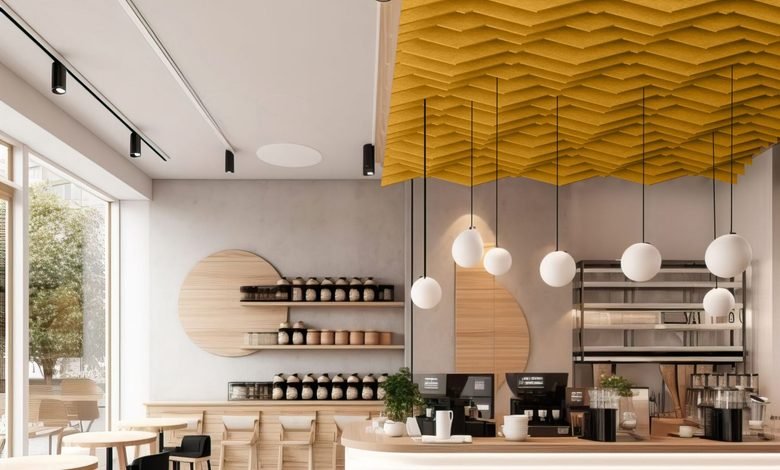
Interior finishes play an important role in defining the character of commercial buildings. From corporate offices and educational facilities to hospitality interiors and collaborative workspaces, the materials used throughout a building influence its appearance, functionality and overall atmosphere.
In contemporary architecture, finishes are no longer selected purely for decorative purposes. Designers increasingly consider how different materials contribute to the practical performance of an interior. This is particularly relevant to acoustic design, where the choice of surface textures, fabrics and finishes can influence the way sound interacts with a room.
Selecting appropriate acoustic materials allows architects to bring together visual creativity and sound management. With a wide variety of colours, patterns and surface treatments available, acoustic products can become an integrated part of the architectural concept.
Why Finishes Matter in Acoustic Product Design
Acoustic products need to satisfy more than one requirement. While their primary purpose may involve managing reflected sound, their appearance also needs to complement the surrounding interior.
Traditional acoustic treatments were sometimes selected mainly for their functional characteristics. However, modern commercial projects increasingly demand products that contribute positively to the overall design.
Fabric finishes, textured surfaces, decorative patterns and printed designs offer different ways to achieve this balance. They allow acoustic panels and other treatments to coordinate with furniture, flooring, wall colours and architectural features.
Material selection should also consider durability, maintenance and suitability for the intended application. A finish that works well in a private meeting room may not necessarily be appropriate for a busy reception area or communal workspace.
Exploring Different Types of Acoustic Finishes
The choice of finish can significantly influence the visual character of an acoustic product. Designers can select from several approaches depending on the architectural concept and functional requirements.
Fabric coverings are widely used for acoustic panels because they offer flexibility in colour and texture. They can provide a subtle appearance within corporate interiors or introduce contrasting colours to create decorative features.
Felt finishes offer another possibility. Their textured appearance can complement contemporary office designs, particularly where designers want to introduce softer-looking materials into environments dominated by glass, metal and concrete.
Printed finishes provide further creative opportunities. They can incorporate graphics, patterns and custom visual elements, allowing acoustic products to become part of a company’s interior identity.
The Acoustics Company offers several finishing possibilities across its product collections, including fabric, felt and printed options.
Creating Distinctive Interiors with Decorative Wall Treatments
Walls provide valuable opportunities to introduce colour, texture and acoustic products into commercial interiors.
Instead of relying entirely on conventional paint or wallpaper, architects can use decorative acoustic panels to create feature walls that contribute to the character of a space.
Different panel configurations allow designers to explore geometric patterns, layered arrangements and textured surfaces. These approaches can help establish visual interest while incorporating sound-absorbing materials.
The Acoustics Company’s wall collections include products such as Tone, Montage, Etch and Stencil. Each collection offers different design possibilities, from sculptural surfaces to geometric arrangements and decorative grooves.
Such products can be selected to complement corporate branding, furniture arrangements and other architectural features.
Material Selection for Contemporary Commercial Spaces
The material used within an acoustic product influences its appearance, construction and intended application. Architects should therefore consider material characteristics alongside colour and decorative finish.
Recycled PET is one option used in contemporary acoustic panels. It can be manufactured into different shapes and thicknesses, allowing designers to explore a variety of wall and ceiling configurations.
Glass wool is another material used in acoustic applications, particularly in ceiling systems. Its suitability depends on the product specification and intended installation.
The Acoustics Company offers products incorporating recycled PET and glass wool, alongside different surface finishes. This variety gives designers flexibility when developing specifications for different types of commercial buildings.
A carefully selected combination of materials can help maintain consistency throughout an interior while accommodating the requirements of individual spaces.
Acoustic Finishes for Open-Plan Offices
Open-plan offices often combine large shared areas with smaller collaborative zones, individual workstations and meeting spaces. Creating a consistent interior appearance across these different areas can be challenging, particularly when acoustic products are introduced.
Selecting suitable acoustic finishes for open plan offices allows designers to coordinate wall panels, ceiling treatments and screens with the wider architectural concept.
For example, a company may choose neutral fabric finishes for individual working areas and more distinctive printed panels for reception or collaborative spaces. Consistent colour schemes can help connect different parts of the office while allowing each area to retain its own identity.
Texture can also be used to create visual variation. Felt surfaces, decorative grooves and three-dimensional panels can introduce depth without requiring major changes to the overall layout.
The important consideration is to select finishes that complement both the intended appearance and the functional requirements of the workplace.
Using Colour and Texture to Support Interior Identity
Colour is an effective design tool in commercial environments. Businesses often use specific colour palettes to reinforce their branding and create a recognisable interior identity.
Acoustic products provide opportunities to incorporate these colours into walls, ceilings and furniture-related features.
A restrained palette may be suitable for professional offices seeking a minimalist appearance, while creative organisations may prefer contrasting colours and more expressive patterns.
Texture provides another dimension. Smooth fabric coverings can create a clean appearance, whereas grooved, sculptural or felt surfaces offer more visual character.
Designers can combine different finishes within the same project, provided the overall arrangement remains coordinated.
Bespoke Finishes for Architectural Projects
Standard products do not always meet the requirements of specialist commercial interiors. Some projects involve unusual dimensions, specific colour references or distinctive architectural features that require a more individual approach.
Bespoke finishing allows designers to explore customised patterns, sizes and surface treatments. This can be particularly useful when acoustic products need to align with furniture, lighting or existing wall details.
The Acoustics Company provides design and manufacturing services that support projects requiring customised acoustic products. Its capabilities allow project teams to consider material selection and decorative requirements alongside product development.
Prototyping can also help establish whether a proposed finish works as intended before larger production quantities are manufactured.
This process is valuable for projects where consistency across multiple panels or interior areas is particularly important.
Considering Durability and Maintenance
A visually attractive finish should also be appropriate for its environment. Commercial buildings experience regular use, and acoustic products may be exposed to dust, contact and routine cleaning.
Before selecting a material, businesses should review its maintenance requirements and suitability for the intended location.
For example, a reception area may require different finishing considerations from a private office. Similarly, products installed near high-traffic corridors may need to meet different practical requirements from those used in less frequently occupied spaces.
Architects should also consider installation methods and whether products can be maintained or replaced without disturbing surrounding building components.
These details help create interiors that remain visually consistent and practical over time.
Integrating Finishes with the Wider Acoustic Specification
Acoustic finishes should form part of a coordinated product specification rather than being selected independently.
A commercial office may include wall panels, ceiling rafts, suspended baffles, desk dividers and partitions. Each product category offers different opportunities for material and finish selection.
Coordinating these elements helps maintain a consistent design language throughout the building.
It is also important to remember that decorative appearance alone does not determine acoustic performance. The underlying material, product construction, installation and surface coverage all contribute to the finished result.
Working with an experienced acoustic manufacturer can help designers understand the available options and select suitable combinations for their projects.
Conclusion
Finishes are an important part of modern acoustic product design because they connect practical sound management with architectural appearance. Fabric, felt, recycled PET, decorative grooves and printed surfaces provide numerous possibilities for creating attractive commercial interiors.
The right selection depends on the building’s purpose, the materials already present and the visual identity the business wants to establish.
By considering finishes early in the design process, architects and interior designers can create coordinated environments in which acoustic products contribute to both functionality and aesthetics. The Acoustics Company’s range of finishing options provides opportunities to develop customised solutions that complement different architectural styles and commercial requirements.
Must Read: TheTechyx.com: Review Features, Benefits, and Safety



One Comment