

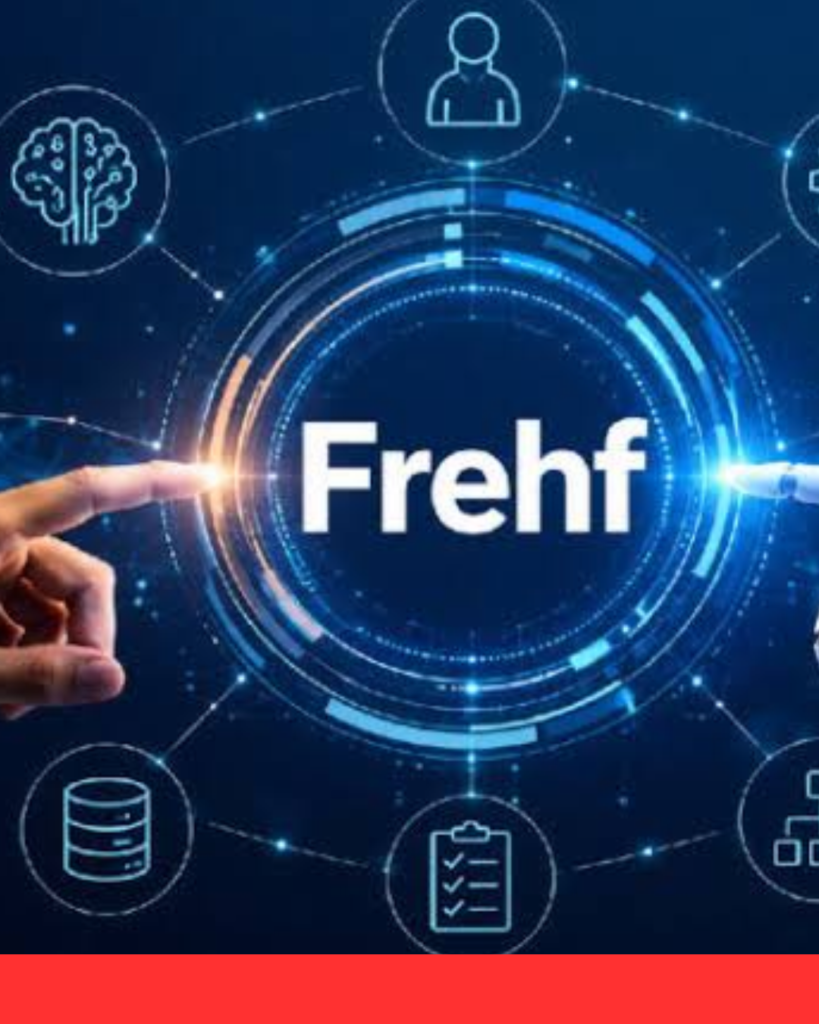
Frehf is an emerging framework connected with human-centred technology, artificial intelligence, automation and better decision-making. It focuses on using technology to support people rather than replacing human involvement in every task. Frehf is commonly expanded as Future Ready Enhanced Human Framework, although its definition is still developing and is not yet recognised as a formal international standard.
What Is Frehf?
Frehf can be described as a framework for improving how people, technology and information work together. Its main purpose is to help organisations automate repetitive tasks while keeping humans involved in areas that require judgment, responsibility, creativity or empathy. The concept focuses less on maximum automation and more on choosing the right balance between people and technology.
What Does Frehf Mean?
The term FREHF is commonly interpreted as Future Ready Enhanced Human Framework. “Future ready” refers to preparing people and businesses for increasingly digital workplaces. “Enhanced human” reflects the idea that technology should strengthen human abilities. “Framework” means it provides principles that can be applied in different situations rather than functioning as one fixed software product.
Where Frehf Comes From
The exact origin of Frehf is not clearly documented. There is currently no widely recognised academic institution or international standards organisation identified as its official creator. Different websites explain the term in slightly different ways. Because of this, Frehf is better viewed as an emerging concept influenced by human-centred design, responsible AI and modern workflow management.
How Frehf Works
Frehf generally follows a continuous improvement process. A team first identifies a problem or desired outcome. It then reviews the existing workflow, finds unnecessary steps and decides where technology could help. Once improvements are introduced, the results are measured. Feedback is collected, problems are corrected and the workflow is adjusted again when necessary.
Core Principles
Several ideas appear repeatedly in Frehf discussions. These include human-centred technology, useful communication, clear decision ownership, relevant data and continuous feedback. Instead of adding digital tools simply because they are available, the framework encourages organisations to choose technology based on practical needs. People should also understand what a system does and who remains responsible for important outcomes.
Strategic Alignment
Strategic alignment means connecting everyday activities with clear goals. A business should understand why a task exists before deciding whether to automate it. For example, automatically producing weekly reports may save time, but the company should first determine whether those reports actually influence decisions. Frehf encourages technology investments that support meaningful outcomes rather than adding unnecessary complexity.
Data Awareness
Good decisions depend on useful information. Frehf encourages organisations to examine data such as response times, errors, workload, customer outcomes and completion times. However, collecting more information is not always better. The goal is to identify data that helps people understand problems and make practical decisions instead of creating dashboards filled with measurements nobody uses.
Behavioural Insight
Technology must work with real human behaviour. Employees may ignore notifications when they receive too many, while customers may abandon processes that are confusing or unnecessarily long. Frehf encourages teams to observe how people actually use technology. This helps businesses design workflows that reduce frustration and support users instead of expecting people to adapt to inefficient systems.
Continuous Improvement
Frehf also supports gradual improvement rather than large changes made all at once. A company can improve one process, measure the results and correct problems before expanding the approach. This method can reduce risk because organisations learn from smaller changes. Successful improvements can then be introduced across other departments without completely redesigning operations at the beginning.
Frehf and Artificial Intelligence
Artificial intelligence is closely connected with the Frehf concept. AI can process information, summarise documents, identify patterns and automate routine activities. Under a Frehf-style approach, people remain responsible where context and judgment matter. For example, AI could prepare a recommendation while a manager reviews the information and decides whether the suggested action is appropriate.
Human Oversight
Human oversight is especially important when automated decisions have serious consequences. Low-risk activities, such as organising documents, may require little supervision. Decisions involving healthcare, employment, finance or customer rights may require stronger review. Frehf promotes clear boundaries between tasks that systems can perform independently and those where a responsible person should remain involved.
Decision Ownership
Automation can create confusion when responsibility is unclear. If software recommends an action and another system completes it automatically, employees may not know who is accountable when something goes wrong. Frehf encourages organisations to define responsibility before automation begins. Every important workflow should have clear rules explaining what technology controls and who has final decision authority.
Feedback Loops
Feedback loops allow workflows to improve over time. Suppose an AI tool repeatedly places certain customer enquiries in the wrong category. Employees may correct those mistakes, but Frehf encourages teams to examine why the errors occur. Customer comments, employee feedback, performance data and system errors can all provide useful information for improving future processes.
Frehf for Businesses
Businesses can use Frehf principles when reviewing operations, communication and technology. Teams can identify repetitive activities, unnecessary messages, disconnected data and unclear responsibilities. Automation can then be introduced where it solves a specific problem. The aim is not to use more software. It is to create a clearer working environment where technology supports meaningful business activities.
Frehf for Personal Productivity
Frehf principles can also apply to individual productivity. A person might identify tasks that consume time every week and determine which ones could be simplified. Reminders, templates or automation could handle repetitive activities while the individual focuses on planning and important decisions. This approach helps reduce unnecessary work without giving complete control to technology.
Main Benefits of Frehf
The potential benefits of Frehf include less repetitive work, clearer responsibilities, improved communication, better use of data and greater adaptability. Automation can handle routine tasks while people concentrate on areas requiring experience and judgment. Continuous feedback may also help organisations identify problems earlier. However, these benefits depend on implementation and should not be considered guaranteed results.
Challenges and Limitations
The biggest limitation is that Frehf does not yet have one universally accepted definition. Some websites describe it as a productivity framework, while others connect it mainly with AI and automation. There is also limited independent research specifically testing Frehf as a named methodology. Many of its ideas already exist within responsible AI, Lean and human-centred design.
Does Frehf Need Special Software?
There is no strong evidence that Frehf requires dedicated software. Its principles can potentially be applied using existing project-management tools, spreadsheets, AI applications, communication platforms and automation services. Businesses should therefore be cautious when websites present Frehf as one specific application with confirmed subscriptions, dashboards or operating-system requirements without providing reliable official documentation.
Frehf vs Other Frameworks
Frehf shares similarities with established approaches such as Human-Centred Design, Responsible AI, Lean, Agile and human-in-the-loop AI. Human-centred design focuses on user needs, while Lean reduces unnecessary work. Agile supports continuous adjustment, and responsible AI emphasises transparency and accountability. Frehf appears to combine several of these ideas around human and technology collaboration.
Why Frehf Matters
Frehf matters because businesses can automate more tasks than ever before. The key challenge is no longer simply whether technology can perform a task, but whether complete automation is appropriate. Frehf encourages organisations to preserve human involvement where responsibility, judgment and context remain important while allowing technology to handle repetitive and predictable work.
Future of Frehf
The future of Frehf as a recognised name is uncertain, but the ideas connected with it are likely to remain relevant. As AI systems become more capable, organisations will need clearer rules for oversight, responsibility and human-machine collaboration. Future Frehf-style workflows may place greater emphasis on explainable AI, better data use and systems designed around human needs.
Final Thoughts
Frehf is best understood as an emerging framework that promotes better cooperation between people, AI, automation and information. Its strongest ideas include human-centred technology, clear responsibility, useful data, feedback and continuous improvement. Rather than automating everything possible, Frehf encourages organisations to use technology where it adds genuine value while keeping appropriate human judgment and oversight in important decisions.
Must Read: Wenrath: Meaning, Origin, Location, and Background
FAQs
What is Frehf?
Frehf is an emerging framework focused on improving collaboration between people, artificial intelligence, automation and digital systems. It encourages technology to support human abilities rather than automatically replacing human involvement.
What does FREHF stand for?
FREHF is commonly expanded as Future Ready Enhanced Human Framework. However, the term is still used differently across websites, so this expansion should be understood as a common interpretation rather than a universally standardised definition.
How does Frehf work?
Frehf generally starts by identifying a goal, reviewing the current workflow and finding tasks that can be improved. Technology or automation is then introduced where useful, followed by measurement, feedback and further adjustments.
Is Frehf an AI tool?
Frehf is better described as a framework or methodology rather than a confirmed standalone AI application. Its principles can be applied using existing AI tools, automation platforms, spreadsheets and other workplace software.
What are the main benefits of Frehf?
Possible benefits include reducing repetitive work, improving decision-making, creating clearer responsibilities and making better use of data. Frehf also encourages continuous improvement and appropriate human oversight when automated systems are involved.






One Comment